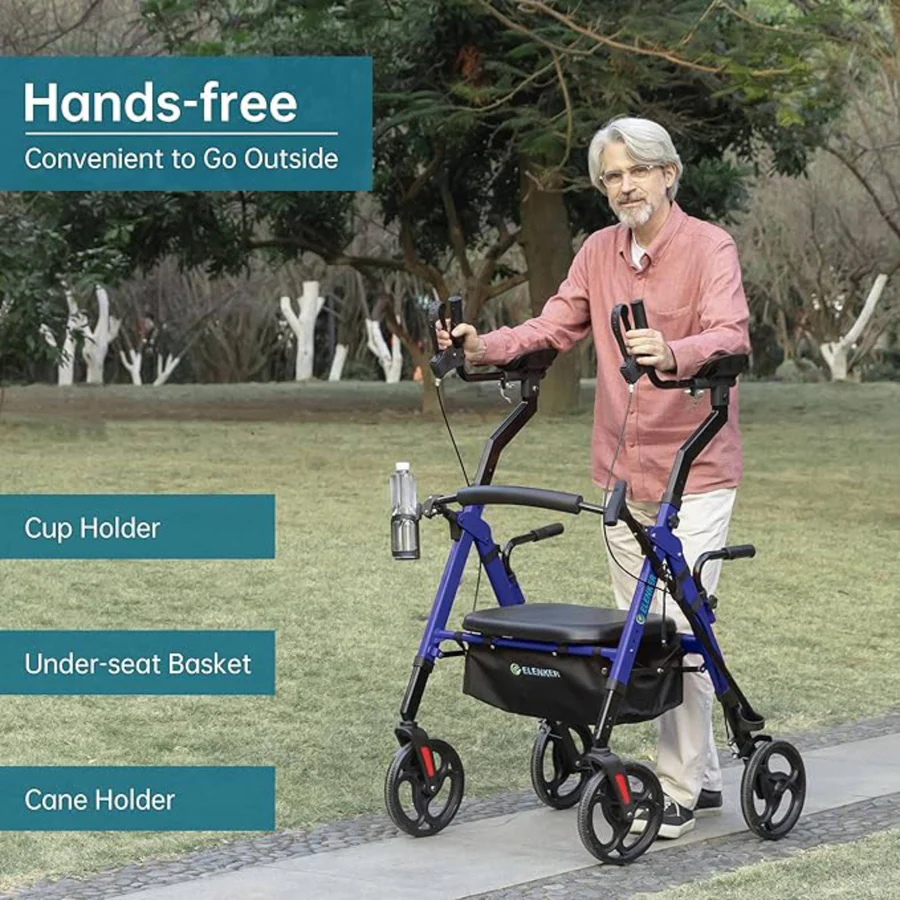
Not all rollator walkers are built the same—and if you’ve ever pushed one that rattled down the sidewalk or didn’t fit your height quite right, you know what I’m talking about. So what actually makes the best rollator? Is it the wheels? The seat? The storage? Truth is, it’s a mix of things that all come together to make your life easier, safer, and more comfortable.
Comfort You Can Count On
Let’s start with the obvious: if the rollator doesn’t feel good, it’s not the one. The best rollators are the ones that you can walk with for blocks—or even just around the house—without feeling sore or awkward.
Here’s what makes a rollator comfortable:
Adjustable handle height: If the handles are too low, you’re going to hunch. Too high, and your shoulders are going to feel it. Being able to adjust the height helps you walk naturally.

Ergonomic grips: Your hands shouldn’t hurt after using your walker. Good handles are easy to grip and don’t cause cramping or fatigue, especially if you’ve got arthritis or weak hands.
Rollator with Padded seat: If your rollator has a seat (and most do), it better be one you actually want to sit on. A nice, cushioned seat with a supportive backrest can make all the difference when you need a break.

Smooth, Stable Wheels
You don’t really think about the wheels—until they don’t work right. If you’ve ever fought with a walker that stuck on carpets, jolted over cracks in the sidewalk, or felt like it had a mind of its own, you already know: wheels matter.
The best rollators usually have:
Large wheels (8 inches or more): These roll better on rough ground, uneven sidewalks, and outdoor trails.
Swivel front wheels: Makes it easy to steer, especially around corners or tight spaces.
Rubberized treads: Plastic wheels tend to slip or wear out fast. Good ones have a bit of grip so you don’t slide out on tile or wood floors.

Built-In Brakes That Actually Work
A rollator should move when you want it to—and stop when you don’t. If the brakes feel loose, sticky, or unreliable, that’s a red flag.
Look for:
Loop-style brakes that are easy to squeeze (even if your hands aren’t the strongest).
Brake locks so you can sit without worrying your walker will roll out from under you.
Bonus points if the brake cables are hidden or built-in—it’s safer and looks better.

Storage That Works
You’ve got stuff to carry. Maybe it’s your water bottle, a book, or your wallet. Whatever it is, a good rollator helps you bring it along without turning you into a human pack mule.
Some of the best ones offer:
Under-seat pouches or wire baskets (some even have zippered bags for more privacy).
Built-in cane holders, so you’re not juggling extra equipment.
Cup holders or trays for convenience during longer outings.

Storage isn’t just a perk—it’s about keeping your hands free and your load balanced.
Easy Folding and Transport
Whether you’re getting into a car, taking a bus, or just storing your rollator in the closet, it should be easy to fold and light enough to lift (or at least manage without a wrestling match).
Look for:
One-handed folding mechanisms that don’t require a manual or superhuman strength.
Compact designs that stand when folded (some do!).
Lightweight frames, especially if you or your caregiver will be lifting it often.
Aluminum frames tend to be sturdy and light—perfect combo for daily use.

The Right Fit for Your Body
This one’s important. The best rollator for you is the one that fits your height, weight, and walking style. It should feel like an extension of your body, not something you’re dragging behind you.
Check:
Handle height range: Make sure it adjusts to fit your natural standing posture.
Seat height and width: You should be able to sit comfortably with both feet on the floor.
Weight capacity: Most standard rollators support around 250-300 lbs, but there are heavy-duty versions for higher limits.

If it feels awkward, it probably is.
Indoor or Outdoor Use? Or Both?
Think about where you’ll use your rollator most. Indoors? Outdoors? A little of both? Some walkers are better suited to one than the other.
Indoor models: Often have smaller wheels, tighter turning, and more compact frames. Great for navigating hallways, bathrooms, and tight corners.
Outdoor models: Bigger wheels, sturdier frames, and often come with features like all-terrain tires.
All-purpose rollators: The best of both worlds. If you’re going from kitchen tile to sidewalk to grocery store, these are ideal.
Looks Matter Too
Hey, you’re going to be using this thing every day—it shouldn’t make you feel frumpy or awkward. A lot of rollator brands now offer sleek, modern designs in colors beyond “hospital gray.”
Some upright rollators even look more like sporty walkers than medical devices. If that helps you feel confident using it out in public? Go for it.
A Few Popular Picks People Swear By
Not naming brands here, but some features users rave about in top-rated rollators include:
Memory foam seats
Lightweight folding frames under 15 lbs
Built-in bags with zippers and reflectors
Tool-free assembly (big win!)
(Elenker walker manual collection here: https://www.elenkerwalker.com/pages/elenker-manual-collection)
Cushioned forearm supports for upright posture
If you’re shopping online, reviews from real users can offer a lot of insight about what actually holds up in real life.
The best rollator isn’t just about features—it’s about how it fits into your life. It should feel solid, help you move with confidence, and give you the freedom to do what you enjoy without worrying about your balance or comfort.
If it checks those boxes—smooth wheels, easy brakes, a comfy seat, some storage, and a good fit—you’re in good hands.
And hey, if it looks good too? Even better.


